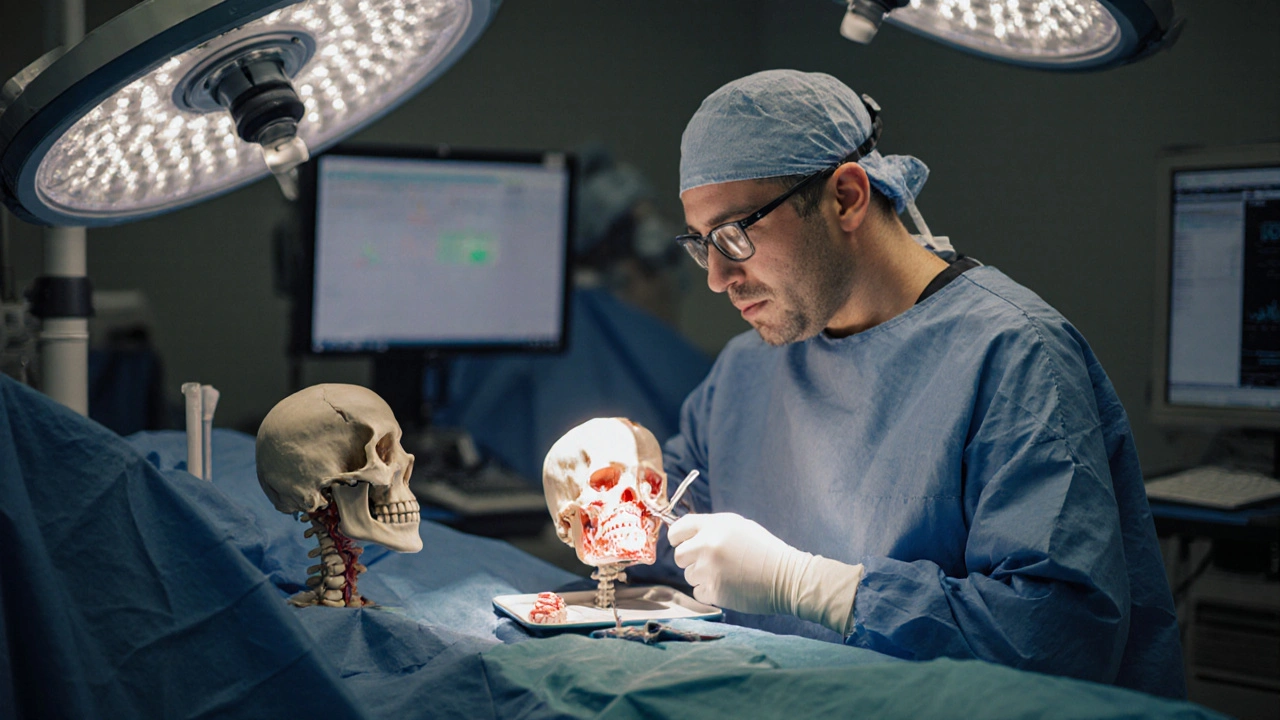
Chirurgický stres: Co to je a jak ho ovlivňují zubní zákroky
When your body goes through a dental procedure like an chirurgický stres, tělesná reakce na invazivní zubní zákrok, která zahrnuje zvýšenou hladinu stresových hormonů a imunitní odpověď. Also known as operativní stres, it’s not just about pain—it’s your whole system reacting to trauma, whether it’s a simple extraction or a complex zubní implantát, implantovaná náhrada kořene zubu, která vyžaduje chirurgický zákrok do čelisti. This isn’t something you can ignore, because if your body is overwhelmed, healing slows down—and that’s when complications start.
Every time you have a tooth pulled or an implant placed, your body triggers a chain reaction: cortisol rises, inflammation spikes, and your immune system goes into overdrive. This is normal—but when it’s too strong or lasts too long, it becomes a problem. People with diabetes, high blood pressure, or chronic stress often feel this more intensely. Even if you don’t feel pain, your body might be struggling. That’s why some patients heal slowly after an implant, while others bounce back in days. It’s not about luck—it’s about how well your system handles operace zubu, chirurgický zákrok na zubu nebo čelisti, který vyvolává systémovou reakci těla. The more prepared your body is, the smoother the recovery.
Good hygiene, sleep, and avoiding nicotine are the biggest factors. Studies show that smokers have nearly double the risk of implant failure because nicotine restricts blood flow exactly when your bone needs to heal. Eating sugar after surgery? That’s like pouring fuel on the fire—it feeds inflammation. Even emotional stress plays a role. If you’re anxious about the procedure, your body stays in fight-or-flight mode longer, which delays healing. The key isn’t just the skill of the surgeon—it’s your own biology. That’s why we talk about preparation before surgery, not just after.
When you understand chirurgický stres, you stop seeing dental surgery as just a quick fix. You start seeing it as a full-body event. That’s why the best results come from patients who rest, eat well, and follow simple aftercare rules—not just the ones who get the most expensive implant. Below, you’ll find real-life guides on what happens after tooth removal, how implants heal, and how to avoid mistakes that slow recovery. These aren’t theory pages—they’re practical checklists from people who’ve been through it.